
Quick Answer
Natural food color comes from plants and minerals. It is gentler on labels but fades faster and costs more. Synthetic food color is made in a lab. It is brighter, lasts longer, and costs less per use. Pick synthetic for bold shades like red velvet or black fondant. Pick natural if your customers want dye free treats.
Intro
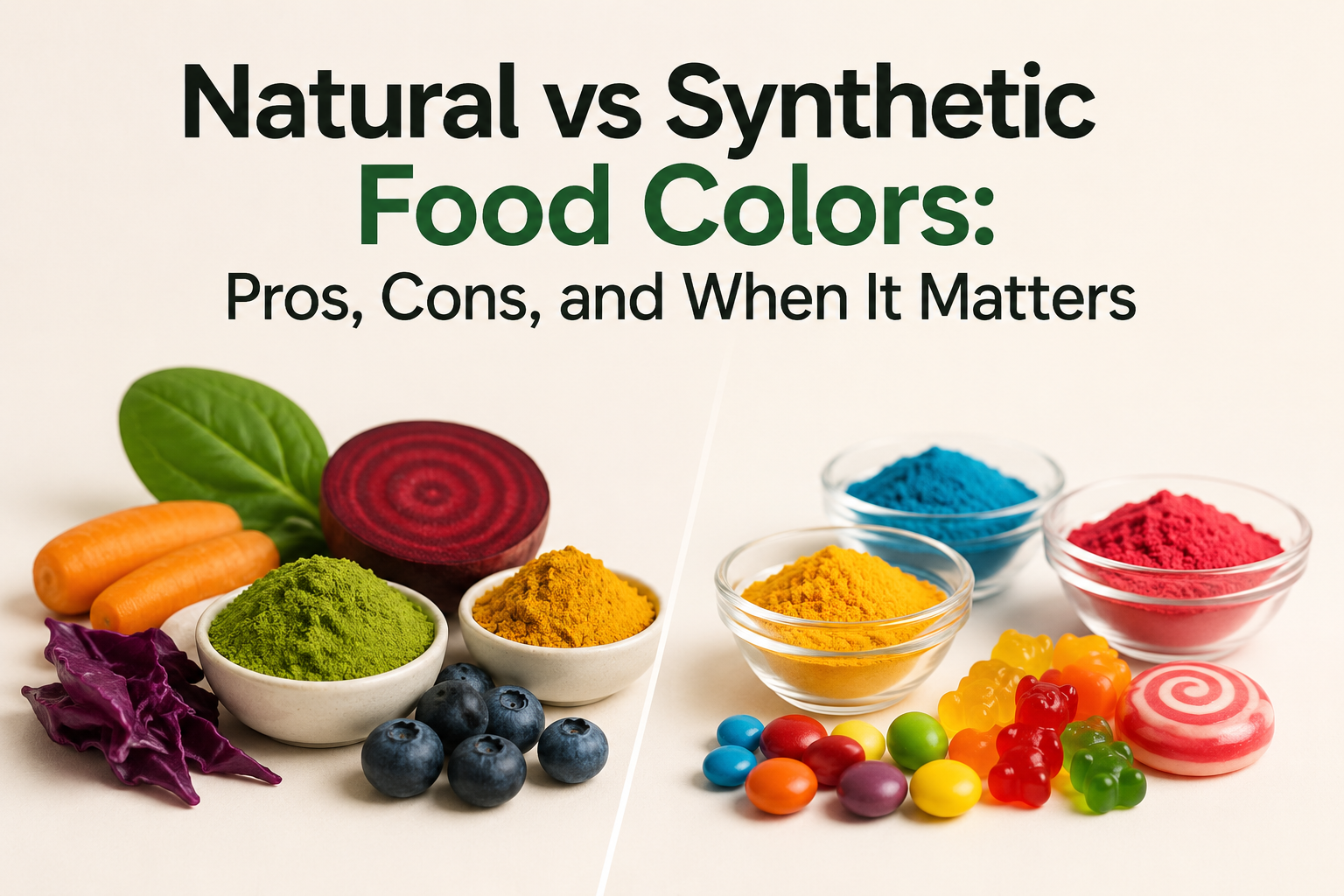
Natural food color comes from plants, fruits, or minerals. Beetroot makes red and pink. Turmeric makes yellow. Spirulina makes blue and green.
These plants get crushed or pressed. The color gets pulled out. Then it turns into liquid, gel, or powder form.
Synthetic food color is made in a lab through a chemical process. Scientists build the color to give a very strong, exact shade every time.
Most bright red velvet cakes and deep black fondant use synthetic gel color. Natural pigments struggle to reach those exact shades.
Which Gives Brighter Color, Natural or Synthetic?
Synthetic food color gives a much brighter, stronger shade using very little product.
A few drops of synthetic red gel can turn a full batch of frosting bright red. Natural red often needs far more product. Even then, it usually looks pink or dull brick red instead of true red.
This is why most bakeries reach for synthetic gel color when they need:
- Deep red velvet cake
- Jet black fondant
- Bold, saturated frosting colors
Why Do Synthetic Colors Stay Bright Longer?
Synthetic colors hold their shade better under heat, light, and time.
Cake batter goes through a hot oven. Icing can sit out for hours at a wedding or event. Natural colors break down faster in these conditions. A natural colored cake often looks duller after baking than it did going in.
Synthetic colors keep their shade through baking, mixing, and storage. This is a big reason bakeries still rely on them for consistent results.
Is Synthetic Food Color Cheaper Than Natural?
Yes. Synthetic food color usually costs less per use because you need only a small amount.
Natural food color often needs two to three times more product to reach the same strength. Over many batches, that extra cost adds up fast.
If you run a bakery or sell in bulk, this difference matters. Home bakers making small batches may not notice it as much.
Why Are More People Choosing Natural Food Colors Now?
More people want natural food color because of health awareness and clean label demand. This trend is growing fast, especially for kids’ treats.
Many parents now read ingredient labels closely before buying snacks or ordering cakes for their children. Some specifically look for dye free desserts or ask bakers what their color comes from.
Here’s the thing: this does not mean synthetic colors are unsafe when used properly. Both natural and synthetic colors are widely used and tested by food color makers before they reach the market. But if your customers care about clean labels, natural color gives you something real to offer.
What Is the Difference Between Gel, Liquid, Candy, and Powder Color?
Gel, liquid, candy, and powder are different forms of food color. This is different from natural or synthetic, which refers to the source. A gel color can be natural or synthetic. The same goes for liquid, candy, and powder color.
Here is how each form works:
- Gel color is thick and strong. It adds color without adding much liquid. Use it for buttercream, fondant, and cake batter.
- Liquid color is thin and watery. It works well for soft pastel shades or coloring drinks.
- Candy color is oil based. It is made only for chocolate, candy melts, and cocoa butter.
- Powder color is completely dry. Use it for dusting sugar flowers, coloring macarons, or adding shimmer to a finished cake.
Can You Use Gel Food Color in Chocolate?
No. Gel and liquid food color will ruin melted chocolate.
Chocolate cannot handle water. Gel and liquid colors carry small amounts of water, even though they look thick. Adding them to melted chocolate makes it seize up into a grainy, clumpy mess that cannot be fixed.
Use candy color instead. This oil based color is made just for chocolate, candy melts, and cocoa butter. It blends in smoothly without ruining the texture.
How Much Food Color Should You Add to Frosting or Fondant?
Start small and build up slowly. Follow these steps:
- Dip a toothpick into the color instead of pouring from the bottle.
- Mix the small amount in fully.
- Wait fifteen to thirty minutes before adding more.
- Add another small amount only if needed.
This waiting step matters because many colors, especially red and black, get deeper over time. Skip the wait and keep adding color, and you will use far more than needed.
So add color slowly, mix well, and wait before adding more to avoid using too much.
Why Does Cake Batter Fade After Baking?
Cake batter fades after baking because oven heat breaks down the color. This happens far more with natural colors than synthetic ones.
Once oven temperature passes 180 degrees Celsius, plant based pigments start breaking down fast. Your batter might look bright red or deep purple going in, then come out much duller.
If holding color through baking matters for your product, synthetic gel color made for baking will keep its shade far better than natural color.
So in short, heat breaks down natural color faster than synthetic. Choose synthetic if the color must survive baking.
Why Does Fondant or Icing Color Bleed or Turn Patchy?
Fondant and icing color bleeds when it is not mixed in fully or added too late. Humidity can make this worse.
Adding color near the end instead of mixing it in from the start causes uneven streaks. This dries into a patchy look.
Moisture is another factor. In humid regions like Pakistan, extra moisture in the air affects both color and texture in fondant over time. Store finished pieces in a dry spot, away from direct humidity.
Which Food Color Should You Choose for Your Bakery?
Your choice depends on what you are making and who you are making it for.
Choose synthetic gel color if you are making:
- Red velvet cake
- Bold fondant shapes
- Deep black cake pops or decorations
Choose natural color if you:
- Run a clean label dessert brand
- Bake mainly for young kids
- Want to market dye free treats
Bakeries making large batches often stick with synthetic color because it gives the same shade every single time. Home bakers making smaller batches have more room to try natural options without much cost or waste.
Matching the color form to your product matters just as much as choosing natural or synthetic. Use gel or liquid for cakes, buttercream, and fondant. Use candy color for chocolate and candy melts. Use powder for dusting and delicate, moisture sensitive work.
FAQs
Is gel food coloring the same as natural food coloring?
No. Gel is the texture, not the source. A gel color can be either natural or synthetic. Check the label to know which one you have.
Can I mix natural and synthetic food colors together?
You can, but it will not give fully consistent results. Home bakers sometimes blend them to reach a certain shade with decent results.
How long do natural food colors last on the shelf?
Natural food colors expire faster than synthetic ones. Light, air, and heat break them down quicker. Buy smaller amounts and use them sooner.