
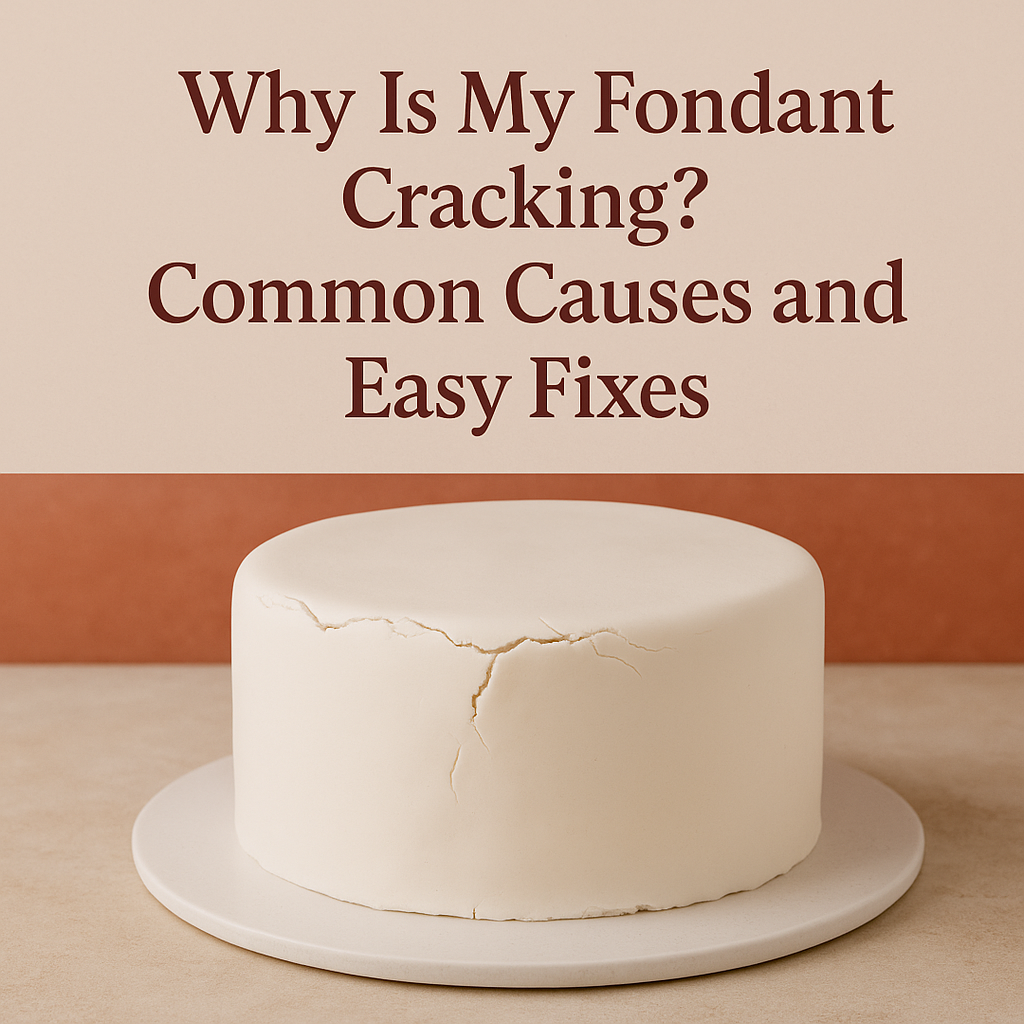
Fondant cracking is one of the most frustrating parts of cake decorating. It happens when the sugar paste becomes too dry or loses flexibility while you’re rolling or covering the cake. The good news is that cracked fondant is completely preventable once you know what’s causing it.
Why Fondant Cracks
Fondant cracks when its moisture balance or texture changes. The most common reason is dryness caused by air exposure or improper handling. Once the surface loses elasticity, it begins to split.
Common causes include:
- Rolling the fondant too thin
- Overusing icing sugar or cornflour while rolling
- Working in dry or very cold conditions
- Stretching or pulling the fondant too much
- Using fondant that is too old or stiff
Fondant starts drying the moment it’s exposed to air. Keep unused portions tightly wrapped in plastic wrap or sealed in a bag while you work.
How Kneading Helps Prevent Cracks
Proper kneading keeps fondant smooth and elastic. Cold or stiff fondant breaks easily, so always warm it slightly before rolling. Knead it until it feels soft, flexible, and smooth.
If the fondant feels dry, rub in a small amount of vegetable shortening. If it’s sticky, let it rest or add a light dusting of icing sugar. This simple step can prevent 90% of cracking problems.
Think of kneading as conditioning the fondant—it blends the oils evenly and makes it easier to stretch over the cake without tearing.
How Rolling Technique Affects Fondant
The thickness and handling during rolling play a big role in preventing cracks. A thin layer can split, while a thick one pulls and causes pressure cracks near the edges.
Aim for an even 3 to 5 millimetres of thickness. If cracks appear at the edges while rolling, stop and knead again before continuing.
Avoid using too much icing sugar or cornflour on the surface. Excess powder dries out the fondant. Instead, lightly coat the surface with vegetable shortening so the fondant stays soft and easy to roll.
How Temperature and Humidity Affect Fondant
Fondant reacts quickly to changes in climate. Both dry air and excess moisture can ruin its texture.
- Dry environments: The fondant loses moisture and develops surface cracks. Try keeping a small bowl of water in the room or use a humidifier.
- Hot weather: Heat softens the fondant. When it cools, it tightens and cracks. Work in a cool room and avoid direct sunlight.
- Humid conditions: The fondant absorbs moisture, becomes sticky, and cracks once it dries again. Choose a high-humidity fondant or mix a small amount of gum paste for extra strength.
If you store fondant-covered cakes in the fridge, condensation can cause drying once they come out. Keep the cake in a closed box while it warms to room temperature to control the moisture transition.
How the Cake Base Can Cause Cracks
Sometimes the issue lies beneath the fondant. A soft or freshly baked cake releases moisture and air, which weakens the fondant layer.
Let your cake rest and cool completely before covering. Apply a firm buttercream or ganache coating as a stable base. This layer supports the fondant evenly and prevents sagging or splitting later.
If your cake has multiple tiers, insert dowels for support. Without proper internal support, the weight from upper tiers can cause cracks in the lower ones.
Simple Ways to Fix Cracked Fondant
Cracks can be fixed easily without redoing the entire cake.
- Small cracks: Rub a small amount of vegetable shortening into the area using your fingertip. The heat and fat help blend the lines.
- Deep cracks: Press a small, softened piece of matching fondant into the gap and smooth it gently.
- Dry, wrinkled surfaces: Use a quick burst of steam from a steamer or kettle to rehydrate the surface. Smooth it immediately after steaming.
- Cracked edges: Cover with decorative trims, ribbons, or sugar pearls for a clean finish.
Avoid using water for repairs—it melts the sugar layer and leaves shiny marks.
Professional Habits That Keep Fondant Smooth
Bakers who work with fondant regularly follow small habits that make a big difference:
- Slightly warm the fondant before rolling (about 10 seconds in a microwave).
- Use two fondant smoothers to press from both sides and remove stress lines.
- Round off sharp cake edges before covering to avoid thin, stretched corners.
- Don’t apply fondant on cakes that are cold from the fridge.
- Store finished cakes in cardboard boxes instead of airtight plastic containers to allow air circulation.
These practices help maintain smooth, crack-free fondant for longer decorating sessions.
Why Fondant Brands Differ in Performance
Not every fondant behaves the same way. Low-quality or old fondant loses natural oils and elasticity over time, which leads to quick cracking.
Always check the date before using and store fondant tightly sealed. If you work in hot or humid weather, pick a professional fondant made for those conditions.
EFA offers a premium fondant range that stays pliable for longer, performs well in warm environments, and resists surface cracks. It’s designed for bakers who want reliable, easy-to-handle results.
Conclusion
Fondant cracks when it dries, stretches, or faces unstable conditions. Once you understand what causes it, preventing cracks becomes simple. Knead properly, maintain the right rolling thickness, control the environment, and prepare your cake surface correctly.
If you want to avoid frustration and enjoy smoother decorating, choose a fondant that’s built for consistency. EFA supplies high-quality fondant, food colours, flavours, and baking essentials trusted by professionals across Pakistan. Visit our collection and make your next cake look as perfect as it tastes.
FAQs
1. Why does my fondant crack only at the edges?
Fondant cracks at the edges when the rolled sheet is slightly thinner around the borders. This makes the outer area lose moisture faster and pull apart. Re-knead and re-roll to an even thickness to prevent edge splits.
2. Can I stop fondant cracking in dry weather?
Yes. Dry air removes moisture from the fondant surface and makes it stiff. Keep a bowl of water nearby, cover unused fondant instantly, and use a light coat of shortening while rolling to slow dryness.
3. Why does my fondant crack after placing it on the cake?
Cracks appear after covering the cake when the base is uneven or the fondant stretches too much while smoothing. A firm buttercream or ganache layer and rounded cake edges help keep the sheet stable.