
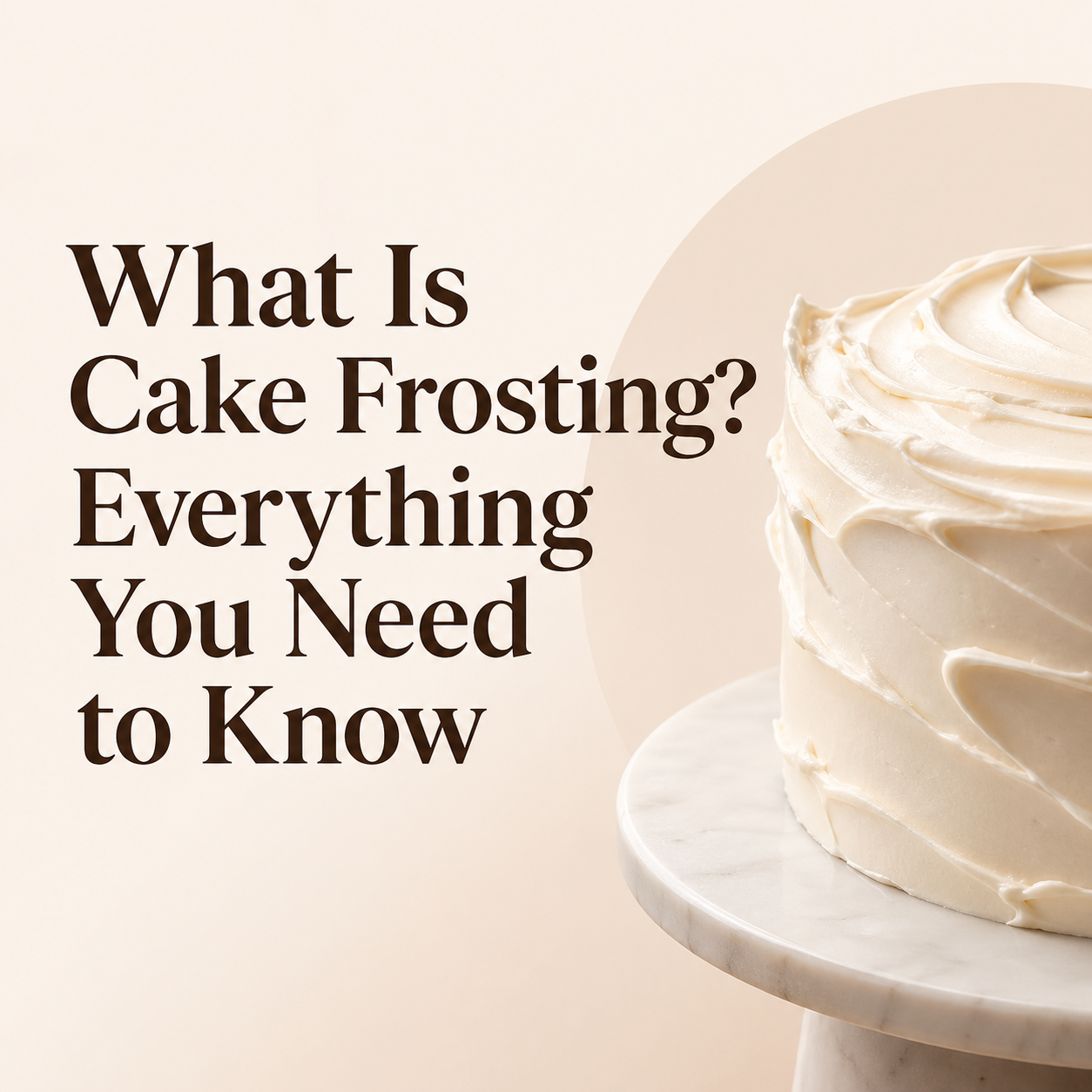
You know that moment when you cut into a cake and it looks perfect, but the first bite feels a bit off? Too dry, too sweet, or just not balanced. Most of the time, the frosting is the reason behind that.
Frosting is what brings a cake together. It adds flavor, keeps the cake soft, and gives it that smooth, finished look. Once you understand how it works, baking starts to feel a lot easier and your cakes start turning out the way you actually want them to.
What does cake frosting actually do?
Frosting helps lock in moisture. A plain cake starts drying out as soon as it sits out, but frosting slows that down and keeps the texture soft for longer.
It also changes how the cake feels when you eat it. A light sponge with a soft frosting feels smooth and easy, while a dense cake with a rich frosting feels fuller. Getting that balance right is what makes a cake feel “just right.”
And then there’s structure. In layered cakes, frosting keeps everything in place. Without it, layers can shift, and cutting neat slices becomes a mess.
Is frosting the same as icing?
They sound similar, but they behave quite differently.
Frosting is thick and creamy. You can spread it, shape it, and pipe it into designs. It stays where you put it, which is why it’s used for covering cakes and decorating them.
Icing is thinner and flows more easily. It settles on its own and gives a light, smooth coating. You’ll usually see it in glazes or drip effects.
If you want neat edges or detailed decoration, frosting is the better choice.
What are the main types of cake frosting?
Buttercream frosting
Buttercream is the one you’ll see most often. It’s made with butter and powdered sugar, and it’s easy to work with.
It spreads well, holds its shape, and works for everything from simple cakes to detailed piping. If you’re just starting out, this is the easiest frosting to get comfortable with.
If it feels too soft, pop it in the fridge for a few minutes. If it feels too thick, a little milk will loosen it up. One small trick that helps a lot is mixing it slowly at the end to smooth it out.
Whipped cream frosting
Whipped cream frosting is light and airy. It gives cakes a fresh feel and doesn’t weigh them down.
It’s great for sponge cakes and fruit cakes. The only thing to keep in mind is that it doesn’t handle heat well, so it needs to stay chilled.
If you want it to hold its shape longer, adding a stabilizer makes a noticeable difference.
Cream cheese frosting
Cream cheese frosting has a slight tang that balances sweet cakes really nicely.
It’s a popular choice for carrot cake and red velvet. The texture is smooth but softer than buttercream, so it spreads easily.
Keeping the ingredients at the same temperature before mixing helps you avoid lumps.
Chocolate ganache frosting
Ganache is made from chocolate and cream, and it’s as simple as it sounds.
When it’s warm, it pours smoothly over cakes and gives that glossy finish. Once it cools, it thickens and can be spread like frosting.
You can adjust how thick it is just by changing the amount of cream. That flexibility makes it really useful.
Fondant frosting
Fondant gives cakes that smooth, polished look you see on celebration cakes.
It’s rolled out and placed over the cake. Underneath, there’s usually a thin layer of buttercream to help it stick and keep the cake soft.
It’s not the easiest to work with at first, but it gives very clean results once you get used to it.
What is cake frosting made of?
Most frostings use simple ingredients.
Powdered sugar gives sweetness and structure. Butter or cream adds smoothness. A bit of milk or cream adjusts the texture.
Flavoring adds personality to the cake. Vanilla is common, but chocolate, fruit, and coffee flavors are also used.
Food color helps bring designs to life. Gel colors are usually better because they don’t change the consistency of the frosting.
How do you choose the right frosting for a cake?
It mostly comes down to the type of cake and what you want it to feel like.
Light cakes go well with whipped cream because it keeps them soft. Heavier cakes work better with buttercream or ganache.
If you’re decorating, buttercream is easier to control. It holds its shape and makes piping simple.
Temperature matters too. In warm conditions, firmer frostings like buttercream or fondant hold up better.
Conclusion
Once you get comfortable with frosting, baking starts to feel a lot less tricky. Your cakes stay softer, your finishes look cleaner, and you spend less time fixing things that went wrong.
If you’re putting in the effort to bake, it makes sense to use ingredients that actually help you get better results. Good food colors, reliable flavoring, and quality baking ingredients can change how your cakes turn out.
Take a look at EFA’s baking range and try it in your next cake. You’ll notice the difference right away.
FAQs
What is the best cake frosting for beginners?
Buttercream is the easiest frosting to start with. It is simple to make, easy to spread, and forgiving if you make small mistakes. You can adjust its thickness quickly, which helps when you are still learning how to frost smoothly.
Why does my cake frosting melt or slide off?
Frosting melts or slips when the cake is still warm or the room is too hot. Soft frosting can also cause this issue. Let the cake cool fully before frosting and chill the frosting slightly if needed to make it more stable.
Can I make cake frosting less sweet?
You can reduce sweetness by adding a pinch of salt, using unsalted butter, or mixing in a little cream cheese. Dark chocolate in ganache also helps balance sweetness without affecting texture too much.
What is the difference between buttercream and whipped cream frosting?
Buttercream is thicker and holds its shape, which makes it better for decoration and piping. Whipped cream is lighter and softer, which makes it better for fresh cakes but less stable in warm conditions.